Our Open Team Resources
Our FTC Open Alliance profile, and our Chief Delphi build thread are both now live.
Our CAD model:
- A2Go 2025 Gobot Fusion Model
- Team 30444 Robot Sign (we 3D print our team sign, starting with red or blue, then doing a filament change to white so the white numbers stand out on the colored base)
- Left side panel with sign holder
- Right side panel with sign holder (this has wider spacing for the control hub and expansion hub to be mounted on the other side).
- Mechanical model for v.1 of our magnetic sensors
Electrical models:
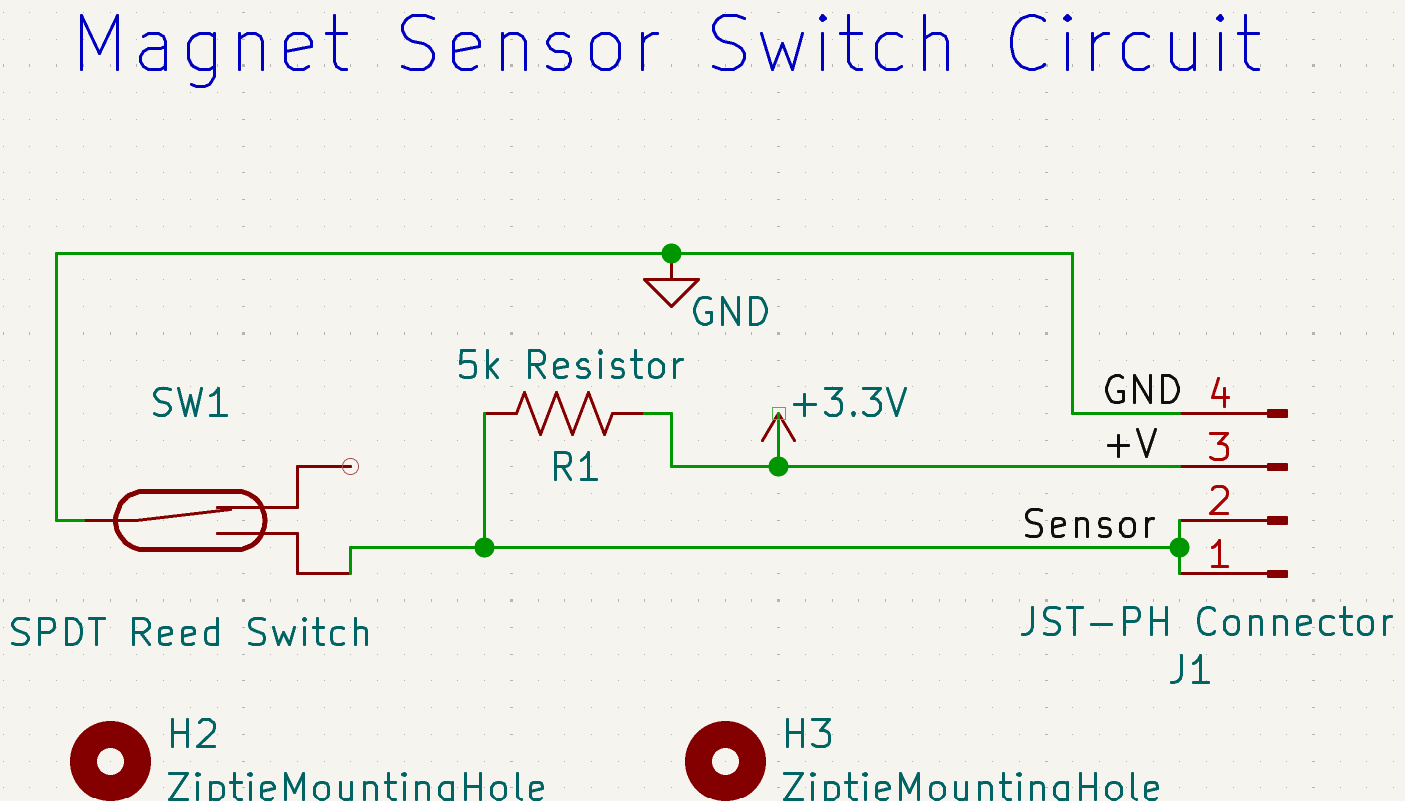
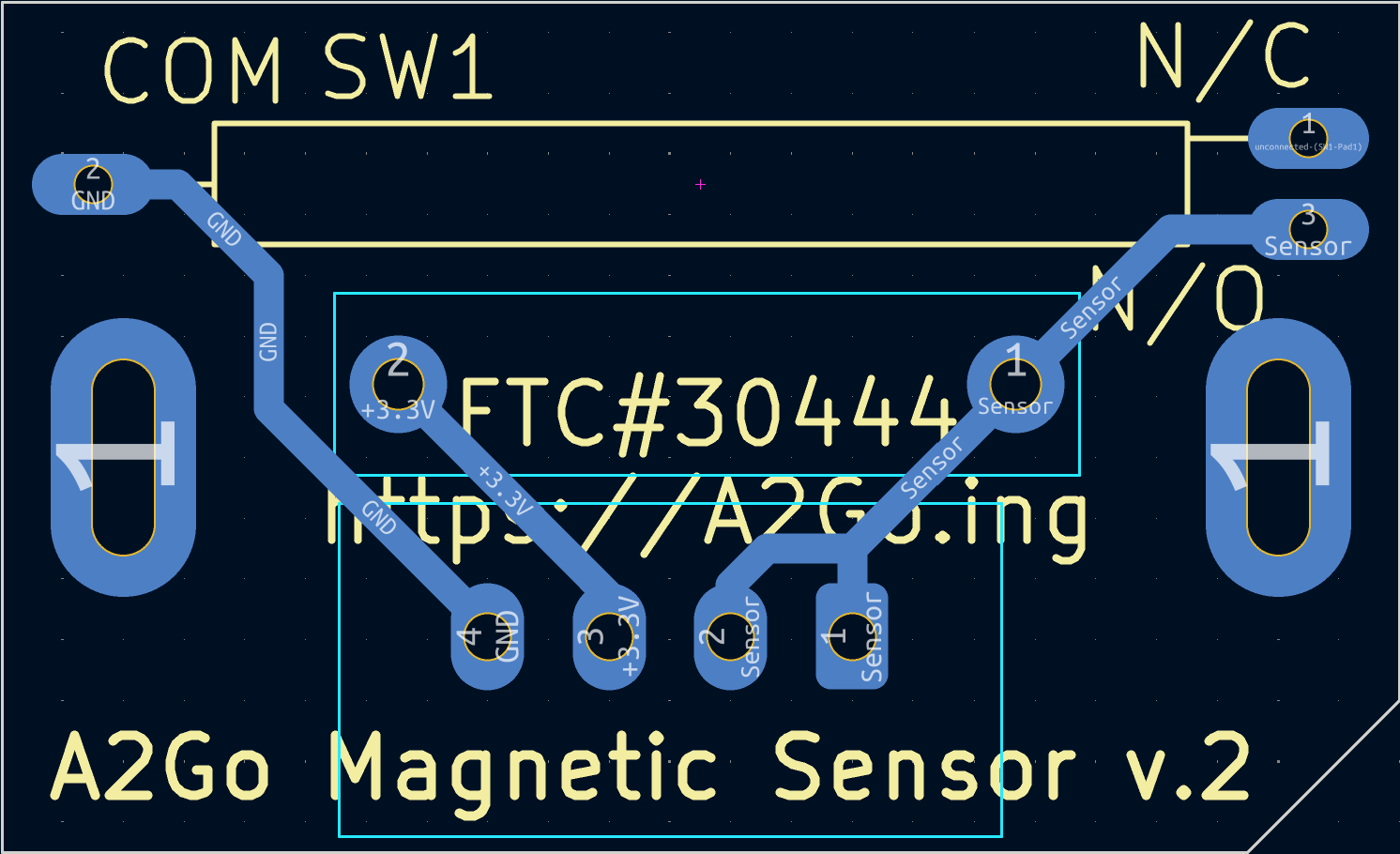
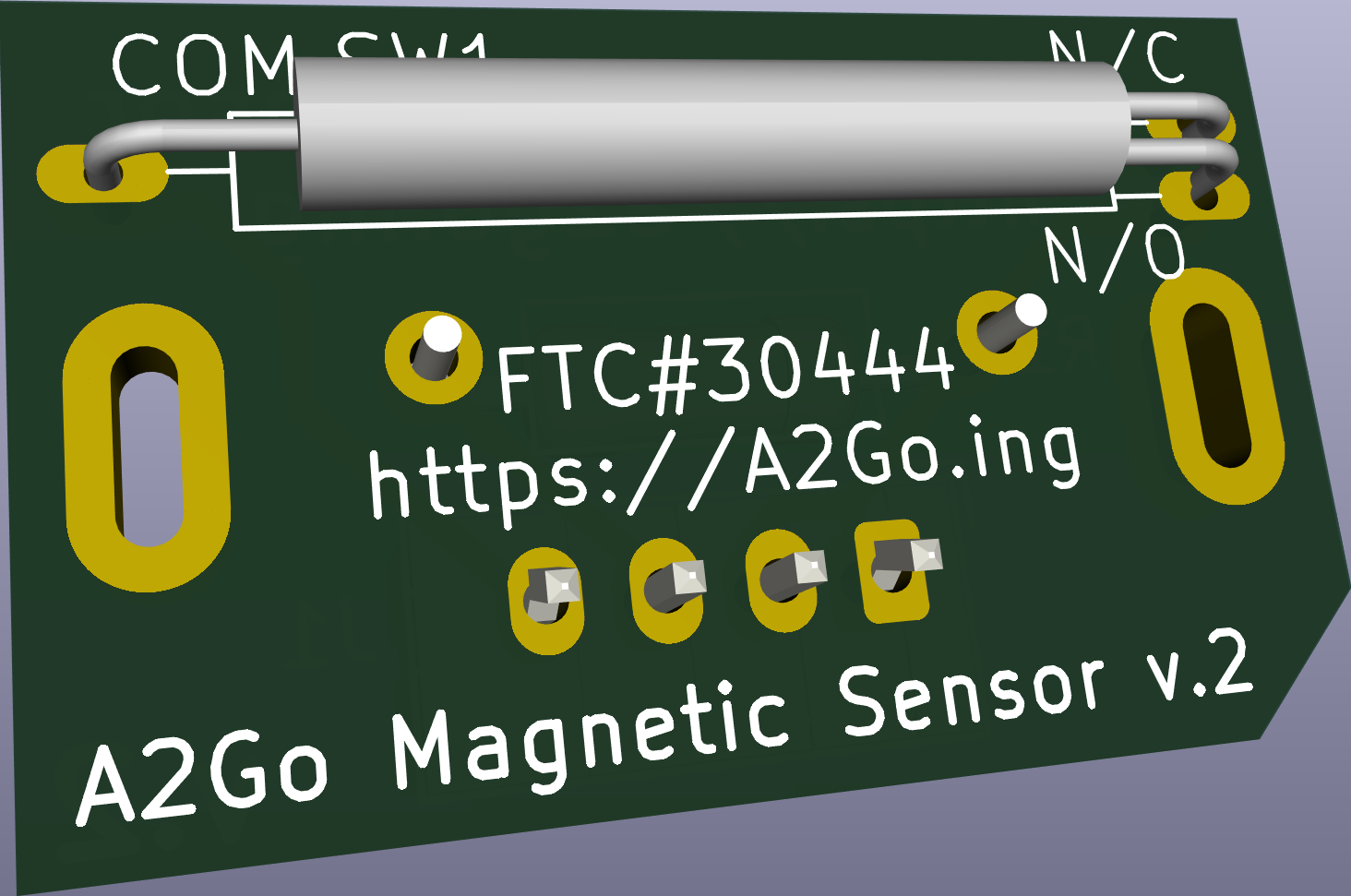
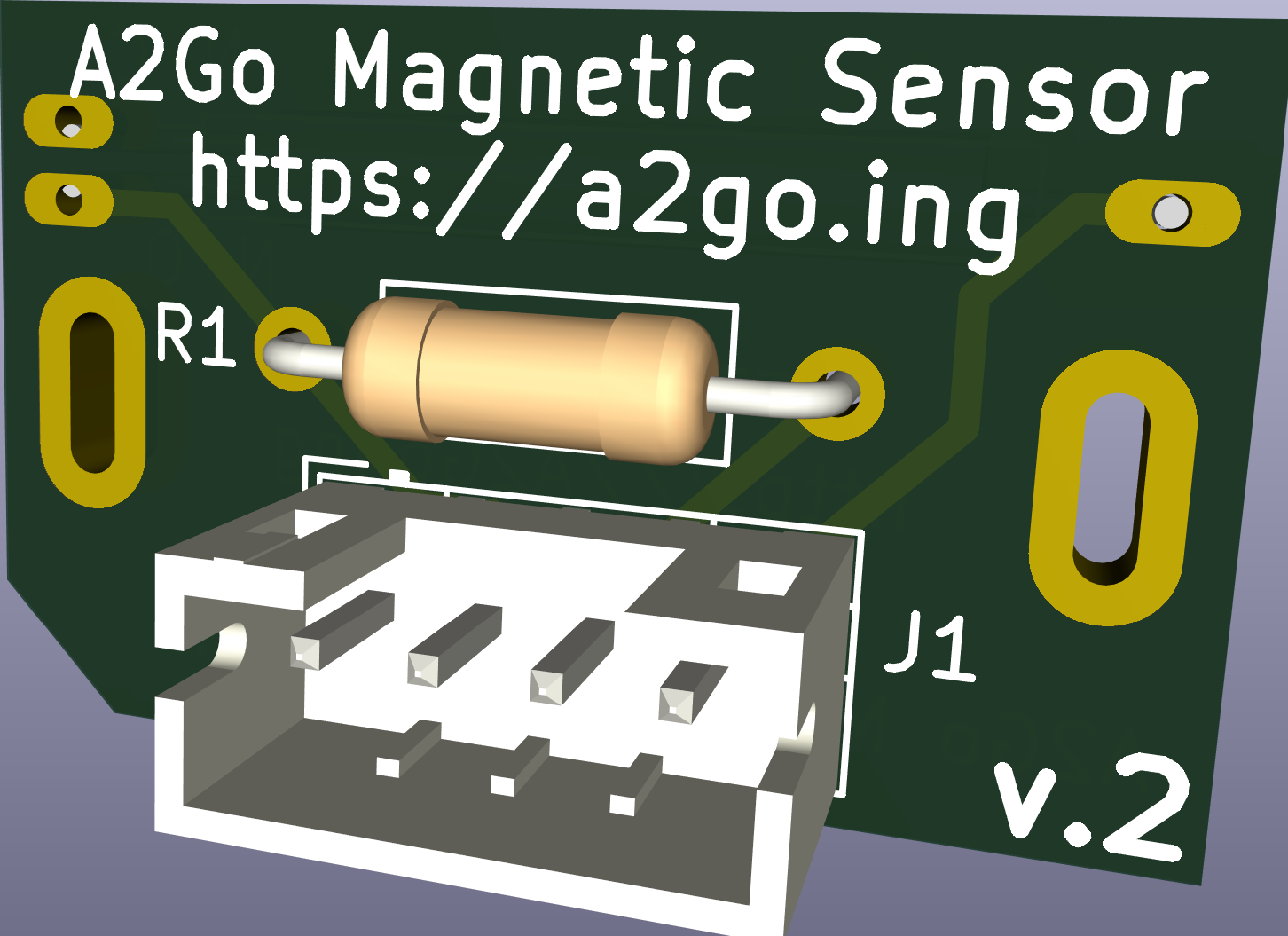
The magnet sensor uses a SPST reed switch (N/O is used), a 5k ohm 1/4W resistor, and a JST-PH mini-micro connector. We ordered our PCBs from OSH Park, who quickly manufacture circuit boards in the US. They are very affordable, 5$/square inch per 3 copies of the board (including shipping!). Our magnetic sensor boards are about 0.5 square inches. Expedited services and shipping are available at additional cost. Also, big thanks to Dan at OSH Park who helped us with our orders. Dan is also involved with their local FRC team, FRC#2811!
Our code (various iterations):
- Drive Code (Blocks) from Nov. 2 2025
- Custom Blocks (Onbot JAVA) Code from Nov. 8
- Github repository with our new Java/PedrodroPathing based auto and teleop
Portfolio
We were inspired by the beautiful Powerplay portfolio from team # 17576.
Because we are a tiny team, we focused strongly on technical elements leading up to our first qualifier. We found that the judging feedback reflected our focus. We were awarded the Inspire 1st place at the BL.
After our first qualifier, we continued to work on technical improvements, but also made a big effort to do outreach and fundraising. We were happy to see recognition from the judges with the improvements we made. We were awarded the Inspire 2nd place at the MSCRL Qualifier in Saline - 10 teams from that qualifier also went to states.
We were surprised by the judging feedback at States. Our presentation & portfolio was received much more critically than expected, with several elements marked as N/A. We were awarded Innovate 1st place at Michigan States NW. We were honored to receive a first place award at States as a new team. At the competition we were in 8th place at the end of the first day. Unfortunately, we had a run of matches that we narrowly lost, and we ended with few enough points that we didn't qualify for advancement.
Other things:
Some of our color sensing testing can be found at: Google Spreadsheet Color Testing. We revised our color sensor placement to be spaced further from the artifacts (balls) so that they wouldn't be as sensitive to the holes in the balls. We also refined our sensing to account for differences between the thresholds for each of the 3 sensors and their different distances to the artifacts.
Mechanical models we're not using, but might be useful for others:
- A first pass on a 3D printed compact bearing stack for making a rotating turret
- The assembly for using the bearing stacks for a turret